
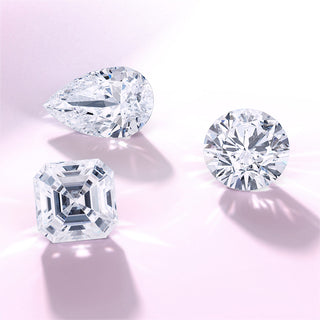
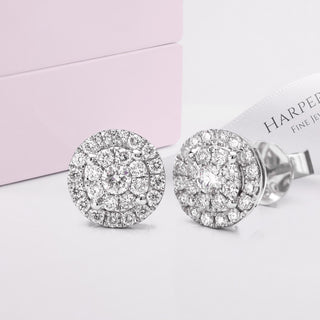
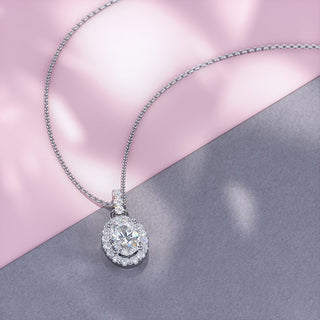
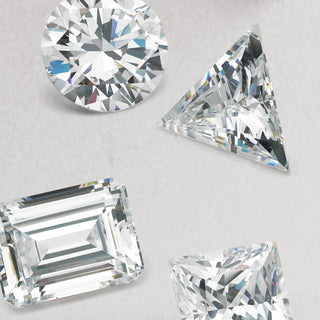


When you first start comparing lab grown diamonds online, pricing can feel difficult to understand. Two diamonds may appear almost identical on paper, yet one is noticeably more expensive than the other.
In most cases, this is not about mystery or hidden markups. It usually comes down to how the diamonds are being compared.
The reassuring part is that value becomes much easier to judge once you know what actually changes how a diamond looks in real life.
Value is about how a diamond looks and feels in everyday wear, not simply the lowest number on a screen.
Our Pieces


What Value Really Means in Lab Grown Diamonds
Value is not only about price. It is about what you see, how the diamond performs and how confident you feel when choosing it.
For many people, value comes down to:
• Brightness and sparkle in normal light
• A balanced shape with strong proportions
• Clarity that looks clean day to day
• Confidence through certification and transparency
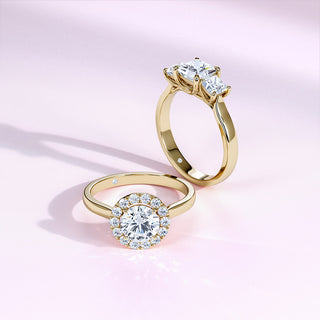
• A diamond that suits the ring style you want
This is why paying more is not always necessary if the visible outcome feels the same.
Why Lab Grown Diamond Pricing Varies
Several factors influence why one diamond may cost more than another.
Cut quality often plays a major role because it changes how the stone handles light. Proportions and measurements also matter, as they affect how balanced the diamond appears once set.
Colour and clarity combinations can influence pricing too, especially when paired with specific shapes or larger carat weights.
Certification also affects comparison. Some diamonds may come with a more detailed lab grown diamond certification, while others provide less supporting information.
Online presentation matters as well. Better videos, clearer imagery and transparent detail often make comparison easier and more reliable.
If two stones are not genuinely like-for-like, pricing will never behave like a simple side-by-side comparison.
The Like-for-Like Rule That Makes Comparisons Fair
The easiest way to compare values properly is to compare genuinely similar diamonds.
Like-for-like means comparing:
• The same shape
• A similar carat range
• Similar cut quality where available
• Similar measurements
• Similar colour range
• Similar clarity range
• Comparable certification
A simple approach we often recommend is shortlisting two or three diamonds, then comparing them properly rather than continuing to scroll endlessly.
Protect Sparkle by Prioritising Cut
For many people, cut has the biggest impact on how beautiful a diamond feels in real life.
A well-cut diamond reflects light more evenly, giving it brightness, life and movement. Even when colour or clarity grades are slightly lower, strong cut quality can still make the diamond appear more visually impressive.
On the other hand, a poorly proportioned stone may feel flatter or less lively, even if the grades on paper appear higher.
This is why protecting sparkle is often the best place to begin.

Check Measurements So You Are Not Paying for Hidden Weight
Carat refers to weight, not necessarily how large a diamond appears once set.
Some diamonds carry more of their weight in depth, which can make them appear smaller from the top view.
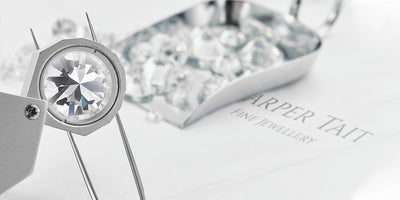
Measurements help you understand how the diamond will actually look on the hand. Comparing measurements side by side is one of the easiest ways to spot whether two stones with similar carat weights will appear different in size.
Choose Clarity and Colour for Real Life
Clarity becomes much easier to understand when you focus on what you can actually see.
For most people, the goal is an eye-clean diamond. This means inclusions are not noticeable during normal viewing.
It is also important to look for transparency and avoid stones that appear hazy or dull.
Colour is more personal. Some people prefer a bright white appearance, while others enjoy a slightly softer warmth, especially depending on the metal the diamond will be set in.
The goal is a beautiful diamond, not an impressive spreadsheet.
Use the Report as a Tool, Not the Whole Story
A grading report is important because it gives verified details and allows fair comparison.
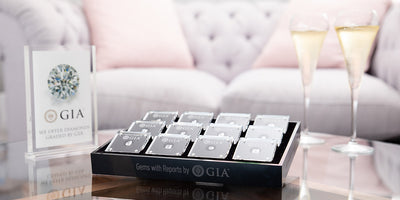
An IGI lab grown diamond report or a GIA lab grown diamond report can help you compare measurements, colour, clarity and proportions more confidently.
What a report cannot fully show is how the diamond behaves in real life. It cannot completely capture sparkle personality, brightness or how balanced the stone feels once viewed in motion.
This is why videos and honest presentation matter alongside certification.
Learn to Read Online Videos and Photos Properly
Online videos can be extremely helpful when used correctly.
What to look for:
• Slow rotation
• Neutral lighting
• Even brightness across the diamond
• Consistent sparkle rather than one bright flash angle
What to be cautious of:
• Very tinted or overly bright lighting
• Fast movement
• Over-edited imagery
If you feel unsure, ask for an additional video in softer, more neutral lighting.

A Simple Two-Diamond Comparison Test
If you are deciding between two diamonds, keep the comparison practical.
Ask yourself:
• Which one looks brighter face up
• Which one has more balanced measurements for its carat
• Which one looks more even in the video
• Which one looks cleaner in normal viewing
• Which one suits the ring style you want most naturally
If they appear very similar overall, choose the best balance rather than chasing the highest grade line by line.
How We Help You Compare Value Properly
We help clients shortlist diamonds that suit their priorities and explain reports in plain English, so the process feels clearer.
Rather than focusing only on grades, we guide you towards the differences that genuinely change how a diamond looks day to day, helping your budget go where it matters most.
We can also provide like-for-like comparisons so you can understand why one diamond feels different from another.
You can explore online, visit us in Hatton Garden or combine both approaches depending on how you prefer to compare.
Frequently Asked Questions
1. Why does lab grown diamond pricing vary so much?
Pricing changes because diamonds differ in cut quality, proportions, measurements, colour, clarity and certification, even when they appear similar at first.
2. Is cut more important than carat for value?
For many people, yes. Strong cut quality often has the biggest impact on sparkle and brightness.
3. What does eye clean mean for lab grown diamonds?
It means inclusions are not noticeable during normal viewing without magnification.
4. Can two diamonds with the same grades look different?
Yes. Cut quality, proportions, and light performance can create noticeable visual differences even when the grades appear similar.
5. How can I compare two diamonds fairly online?
Compare like-for-like by matching shape, carat range, measurements, colour, clarity and certification as closely as possible.
Compare with Confidence
Understanding lab grown diamond pricing becomes much easier once you focus on value rather than headline numbers.
You can explore lab grown diamonds online and shortlist your favourites, or get in touch to book a consultation and compare options like-for-like before you decide.