


Why different finger sizes are completely normal
If you have ever noticed that one ring fits perfectly on one hand but feels different on the other, you are not imagining it. Different finger sizes are completely normal, and it is something we see every day at Harper Tait.
This can feel confusing when you are choosing an engagement ring, wedding ring or a meaningful gift. You want the ring to feel secure, comfortable and ready to wear from the moment it is given. When sizing seems inconsistent, it can make an already important decision feel more uncertain than it needs to.
At Harper Tait, we guide clients through this part of the process with calm, practical advice. Ring fit is never just about one number. It is about how the ring moves over the knuckle, how it settles at the base of the finger and how it feels through the rhythm of daily life.
Our Pieces


Why your fingers are different sizes
There are several reasons why finger sizes vary across both hands, and most of them are part of normal day to day changes.
Your Dominant Hand
For many people, the dominant hand is slightly larger. Every day use can affect muscle tone and subtle swelling, which means the same finger on each hand may measure differently.
Temperature And Time Of Day
Fingers often feel slimmer in colder conditions and fuller in warmer temperatures. Many people also notice that their hands are slightly larger later in the day.
Hydration, Exercise And Travel
Changes in hydration, recent exercise and even long journeys can all affect swelling. A ring that feels easy one day may feel firmer the next.
Hormones And Weight Changes
Hormonal shifts and natural weight fluctuations can affect finger size over time. This is one reason why an older ring may not always feel the same years later.
Arthritis And Knuckle Shape
For some people, the knuckle is the widest part of the finger. Others may notice changes linked to arthritis or joint shape. This can create a common sizing challenge where the ring needs to pass over the knuckle comfortably but still sit securely once in place.
Why a ring can fit the knuckle but spin on the finger
This is one of the most common concerns we hear in appointments. A ring may need enough room to move over the knuckle, but if the base of the finger is slimmer, the ring can rotate once it is on.
That does not always mean the size is wrong. It means the fit needs to be assessed properly.
At Harper Tait, we do not just look at whether a ring goes on. We consider whether it slides over the knuckle with reasonable resistance, whether it settles comfortably at the base of the finger and whether it feels balanced during natural movement. The goal is a fit that feels secure without becoming difficult to remove.
How band width and profile affect ring size
Ring finger size is only part of the picture. The design of the ring can change how that size feels.
Band Width
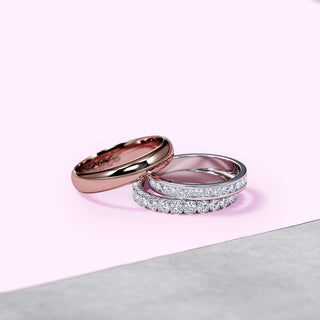
A wider band covers more of the finger, which usually makes it feel firmer than a slim band in the same size. This is why wider wedding rings and stacking combinations often need more careful sizing.
Band Profile
The inside shape of the ring also matters. A comfort fit profile, with a gently rounded interior, can feel smoother over the knuckle and easier to wear through natural daily changes. A flatter profile can feel more exact and structured.
This is why trying on a ring similar in width and profile to the final design is so important. A size confirmed in a delicate band may feel different in a wider style.

Which finger should you measure?
For engagement and wedding rings, always measure the exact finger the ring will be worn on. It is best not to assume the same finger on the opposite hand will match.
This matters particularly for surprise proposals. If you are estimating a partner’s ring size, the most helpful reference is a ring they already wear on the correct finger. If that is not possible, a professional sizing appointment later can fine tune the fit.
The best time of day to measure ring size
If you want the most reliable result, the best time of day to measure ring size is usually later in the day, when fingers are closer to their natural everyday size.
Avoid measuring when your hands are very cold, immediately after exercise or when you are unusually warm or dehydrated. These moments can distort the result and make the ring size less reliable.
How to measure ring size at home
If you need to measure ring size at home, a proper ring sizer is the best option. Printable charts and string methods can be less dependable because they do not reflect how a ring actually passes over the knuckle.
A simple approach is to:
Use a proper ring sizer
Choose a ring sizer that sits like a real band rather than relying on guesswork.
Measure more than once
Check the fit at least twice, ideally at different times of day.
Pay attention to the knuckle
The ring should go over the knuckle with a little resistance, but it should not feel forced.
Consider the final ring design
If the ring will be wide, stacked or comfort fit, keep that in mind when assessing size.
What to do if you are between sizes
If you are deciding between two sizes, the right choice depends on the hand, the knuckle and the ring design.
If the ring passes the knuckle comfortably but feels loose at the base, sizing down may not always be the answer. If it feels secure once in place but difficult to remove, a slightly different size or profile may work better.
This is where jeweller led guidance makes a real difference. At Harper Tait, we assess how the ring behaves in practice rather than relying on a number alone.

What if a ring fits one day and feels tight the next
This is common, and it does not always mean something has gone wrong. Ring fit can change from day to day because your hands change from day to day.
Temperature, hydration, activity levels, travel, hormones and even the time you last ate can all affect swelling. A ring that feels snug in the evening may feel perfect the next morning.
What matters most is whether the overall fit is consistently comfortable and secure over time. If a ring feels painfully tight, leaves a deep mark or becomes difficult to remove regularly, it is worth having the fit checked.
A quick at-home sizing checklist
• Measure the correct finger
• Measure more than once
• Measure at a realistic time of day
• Do not measure when hands are very cold or swollen
• Consider width, profile and stacking
• Check how the ring moves over the knuckle
When resizing may or may not be ideal
Many rings can be resized, but not every design is equally straightforward.
Plain bands are usually the simplest. More intricate rings, especially those with stones set around much of the band, may need a more careful approach. This is why thoughtful sizing before the ring is made is always worthwhile.
In a Harper Tait sizing appointment, we look at comfort, security, movement and the practical realities of the design. That gives you a clearer answer than a home measure alone.
Finding the right fit with Harper Tait
Choosing a ring is about more than getting the measurement right. It is about making sure something important feels right from the moment it is worn.
At Harper Tait, we understand that sizing questions often sit alongside bigger emotions. You may be planning a proposal, choosing wedding rings or trying to make sure a meaningful purchase feels effortless every day. We are here to guide you through that with clarity and care.
Get in touch to arrange an appointment.